

Bread is Tech!
does pasteur = altman?
Every other episode of everything is about AI, why not me?1 Yesterday I started trials on a recipe for paindemaine (aka payndemayne/wastel/demesne) for my forthcoming book, and it reminded me that a few weeks ago I’d spewed out a matcha-fueled screed about how commercial yeast and LLMs might make satisfying parallels. Why not? It’s snowing out and my desk smells like old cornbread and steak - as good a time as any to write a “food letter”. I’ll send some version of the recipe at some point, but not before I subject you to approximately 2300 words on the bread-tech dialectic.
Paindemain is the kind of bread that elites ate (though still in relatively small quantities) in Medieval England and is, at least in folk etymology, the progenitor of the expression “the upper crust”. In literal terms, the sifted roll’s golden carapace was considered the most desirable part and it’s what the rich ate before - sometimes - handing out the bottom half of the loaf, having been transected by one servant or another, to their deserving if pitiable underlings. My recipe uses sourdough but it’s mostly intended as a kind of dough tenderizer, preservative, and to increase digestibility, all more so than as a leavener because I’ve included commercial yeast for that. Sourdough is also an acknowledgement of the available leavening options at the time paindemain was being made (others included barms from ale production and a version of sourdough better characterized as ‘old dough’, which was - and is - just what it sounds like), some 500 years before Louis Pasteur isolated, purified, and patented yeast microbes. But in recipes like this - enriched, mild, a little sweet - I find commercial yeast makes the bread more of what it’s supposed to be.
While developing the recipes for my book I’ve reintroduced commercial yeast to my repertoire after many years away, for a few reasons: to give us another a tool, to honor the antecedents of a lot of the breads I’m including, and to make the recipes more accessible. At least a decade ago I moved distinctly away from the tiny, dutiful spheres of perfectly replicated genetic material, motivated mostly by sensory preference, and gave myself over entirely to natural leavening. This focus grew even sharper as a kind of inexorable intellectual creep took hold of my bread making and I found more reasons to luxuriate in the poetry of slow, wild fermentation. It’s become kind of embarrassing, but I’m still a true believer.2 Writing this book has expanded my view though. I’ll get to why later.3
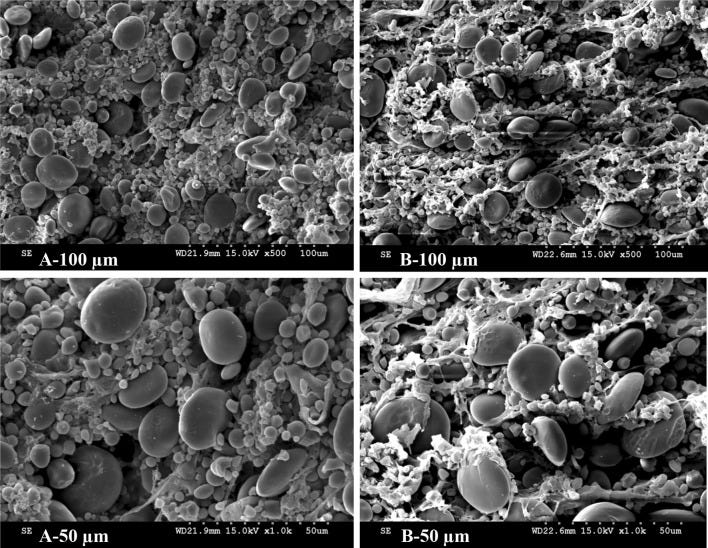
First, I must tell you: I’ve become obsessed with tech news coverage. This is largely because tech now shapes our culture, not the other way around, and because the gobs and gobs of cash these huge, solipsistic companies, run by rich men in silicon valley who are sure they were born to secure the future of the human race (if not the planet it inhabits), are streaming unfettered to DC, effecting decisions that shape our every day. It’s also because politics coverage is redundant, demoralizing, depressing, inherently dishonest.4 Tech tells a lot of the same stories but through a gleaming, juicy, utopic valence that moves forward (towards hell, maybe, but don’t we love progress of any kind) and rarely bends backwards, as politics is doomed to forever and ever.
Bread - like agriculture, like computers - is a kind of technology (“fermentation is a potential bioprocessing technology for improving sensory aspects of bread” wrote these urbane academics). The organic development of leavened bread, advances in milling and combine harvesting, and industrial bread production following the invention of commercial yeast have been some of the most influential culinary (and so cultural) and mechanical tech advancements in history. Now, the making and distribution of bread has become quotidian to the point that its history and process is rarely considered by its consumers.5 This kind of alienation is replicable and so destined to replicate: AI still clogs every headline, but I see a similarly disaffected horizon whenever I send a query through google and my eyes roll fractionally less far into my skull as I pass through the reliably inane Gemini roundup.
Bread and tech are also both bound up in politics and culture broadly, playing similar roles in forecasting social trends that fit outside of their own relatively narrow columns.6 Of course both of these columns run deep and high, bolstering systems (food, capital, social, etc) whose functioning is involved in nearly every facet of our lives. But, of course, in the midst of this tumultuous and fast-moving ocean of big societal shifts, bread is quaint, dwarfed by the threats and thrills imposed by tech proper. What does bread have to do with AGI, really? Or humanoids? And if the answer is not much (I really can’t see a robot feeding my sourdough on my behalf anytime soon), will bread be relevant in six months?
I sort of speak of bread broadly here - like God did when he sent the humans their bread and fishes, with bread as a stand-in for edible sustenance generally - and only a little hyperbolically. We can assume we’ll still be eating bread and other ‘real’ food for a long time, but will the wealthy and powerful pay mind to the torpedoing of SNAP or put money towards making food healthy and affordable if it doesn’t concern their Nvidia stock options? Will the quotidian elements of our very basic human lives - shitting, eating, drinking, puppies, walks in the park - be eaten up by tech, or (better? worse?) get left behind by it?
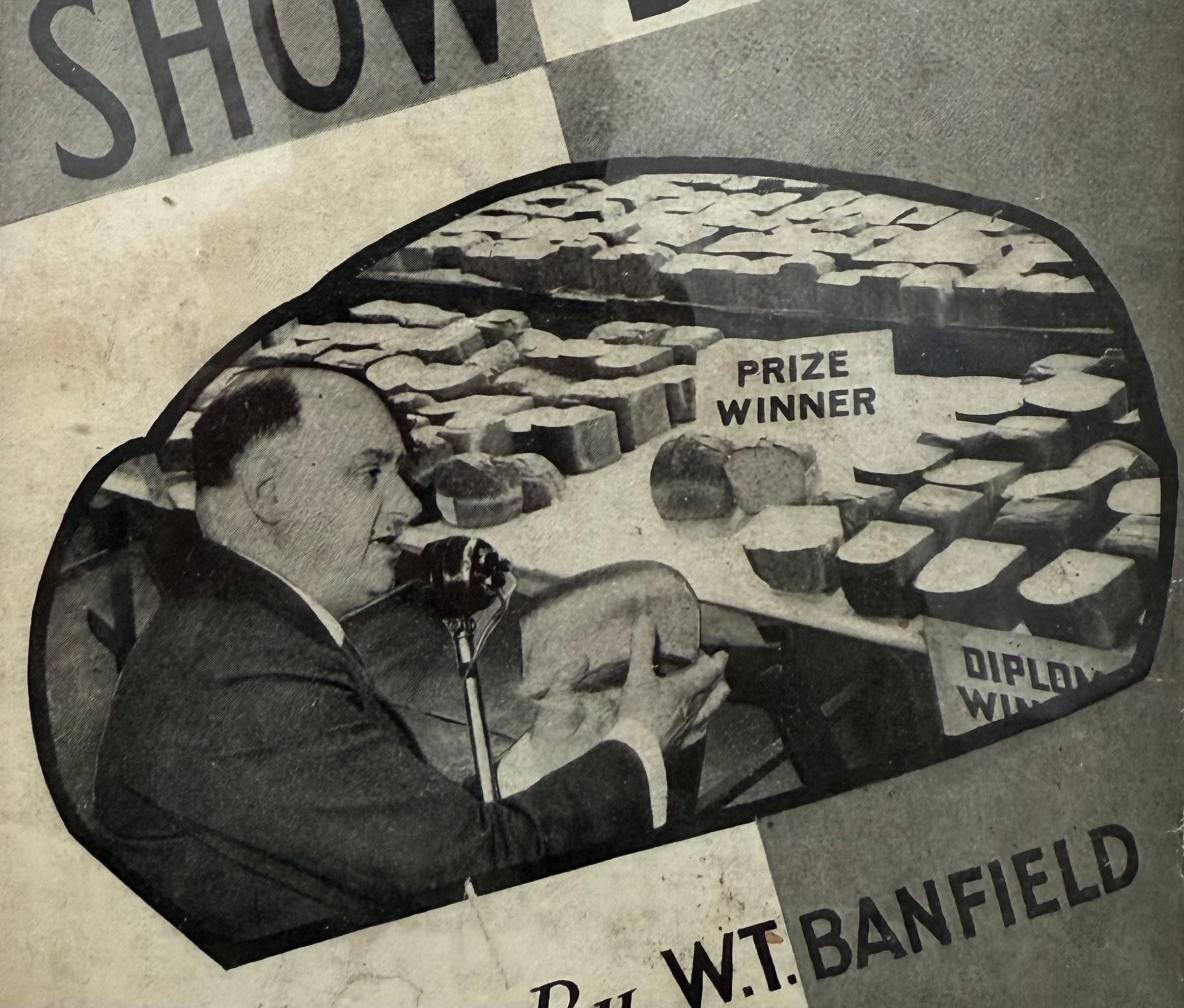
I’ve always found that talking about bread can elicit a kind of avuncular humoring, an isn’t that interesting sweetheart sort of response. But during the pandemic the general public (Americans especially) became more aware of the power and allure of bread. It was then that tech bros famously colonized the online bread world (which now seems inevitable, considering their fluency and affection for the platforms required), baking loaf after loaf of what they considered ideal sourdough boules, whose most famous modern incarnation was minted, conveniently, in their very own Bay Area (YIMBY!).7 They spreadsheeted, optimized, got the crumbs holier, the rises higher, shoved as much water as they could into those mixes, told us how it should - needed - to be, bought pH meters and digital thermometers, and developed mathematical formulas to determine the perfect fermentation. This rigamarole was perpetrated as, at best, a supplement to their five senses and intuition and, at worst, a replacement for them. All in an effort to master something that’s been chugging along for literally thousands of years.
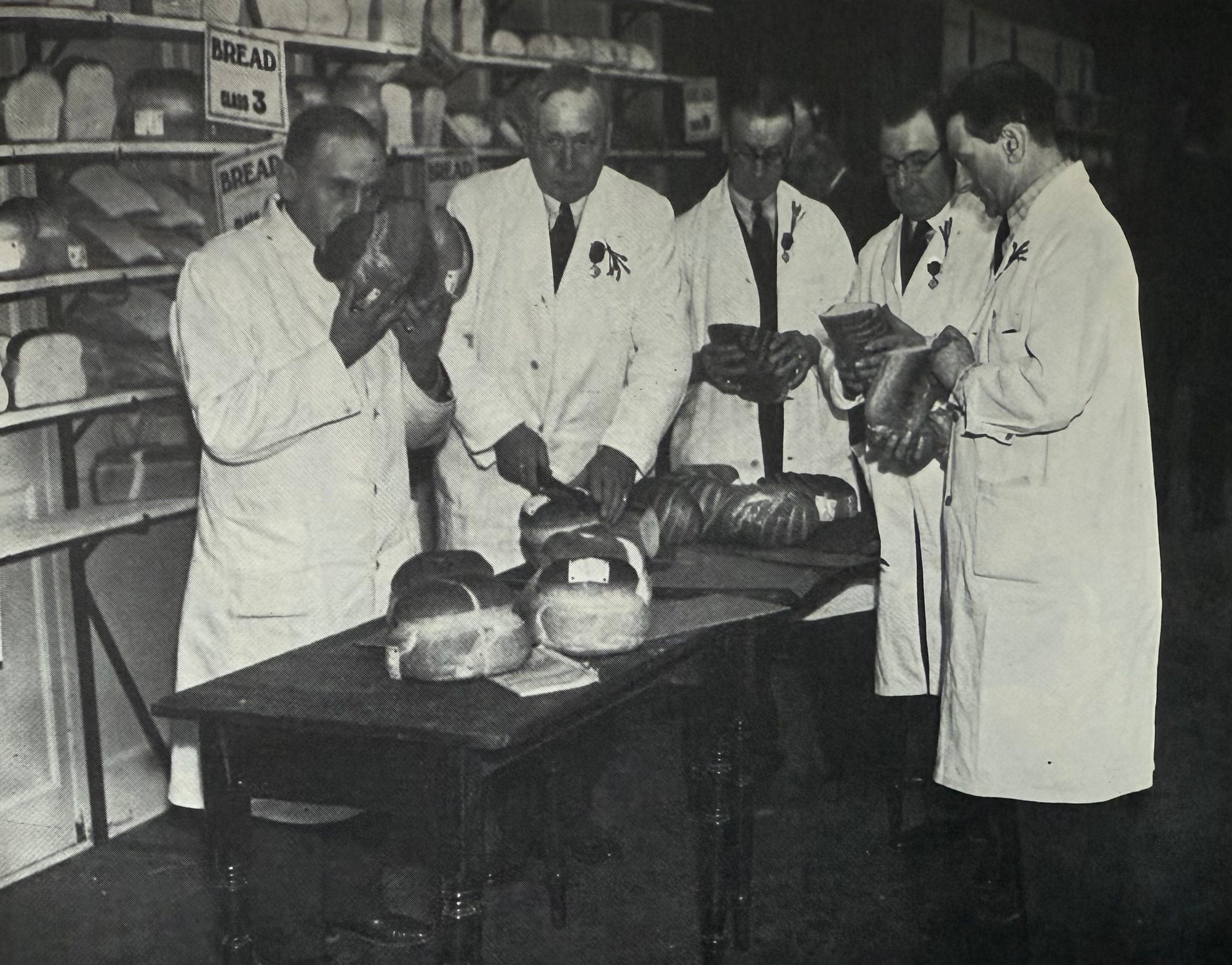
This can ultimately make it harder for a baker to independently understand what’s happening in a dough, which is a living thing after all. Algorithms and AI assistants do something similar. When used carelessly they dampen our senses, impede our ability to make decisions based on what we know about ourselves and our own preferences. Understandings we’ve come to over decades of - just - living our lives.
My thoughts on the parallels between commercial yeast and large language models can likely be mapped onto a million different things. The more time I spend straddled between the worlds of words and bread, the more I think of Pasteur’s pristine Saccharomyces cerevisiae as analogous to a large language model, the proliferating AI systems that trained on massive amounts of online text so that they can understand and generate more of it. As we know, the results are usually grammatically spotless and curiously hollow and milquetoast, missing the mortal machinations of human writing. With commercial yeast, billions of identical yeast microbes are working exactly as they’ve been conditioned, with reliable and consistent output. After the industrialization of yeast and sifted flour, the usage was taken to a max, creating a generation of expedient bread that did away with the texture, nutrients, and depth of its unadulterated source material.
Both these technologies are a promise and a threat. Instant yeast and other chemical leaveners aren’t inherently bad, obviously (don’t listen to people who say this, it’s dogmatic and small minded). They help us do more, and it doesn’t necessarily have to be with less: I find that a pinch of instant yeast in my otherwise naturally-leavened enriched breads makes them more themselves - a loftier, brighter version, with a clearer flavor. And sometimes we want a dough done in two hours, not eight, because something we deem more important requires our attention.
And LLMs: terrifying to me as a writer, and also fascinating, compelling. I don’t use them to write for a few obvious reasons (I want to write my own work - I like writing; I find their outputs so irredeemably boring that I’d be embarrassed to put my name anywhere near one; I know too much about the needs of procuring data and filtering out the nasty shit that AIs spew from it to reasonably participate), but, BUT, there is an exception and a half: these models are such good thesauruses in highly-nuanced situations, and, even more miraculous, they help me remember words that have left the confines of my mind and wandered like a dementia-addled old-timer who jailbreaks her residence to go find some ducks gliding along the oiled surface of a nearby pond. That’s what I use them for.
LLMs and commercial yeast can, in the proper scenario, both make something more nuanced and authentic to the vision of the baker / writer, if paired with a very human precision. For those who’ve never used them, wild fermentation or writing your own work can be intuitive and manageable, but it’s hard to go back once you’ve had that little pick-me-up. Ease requires restraint, and humans so often can’t be trusted with it. I do worry about my children, but I don’t feel like I should have to worry about you or me. We are big kids and should remember that these choices are ours to make.
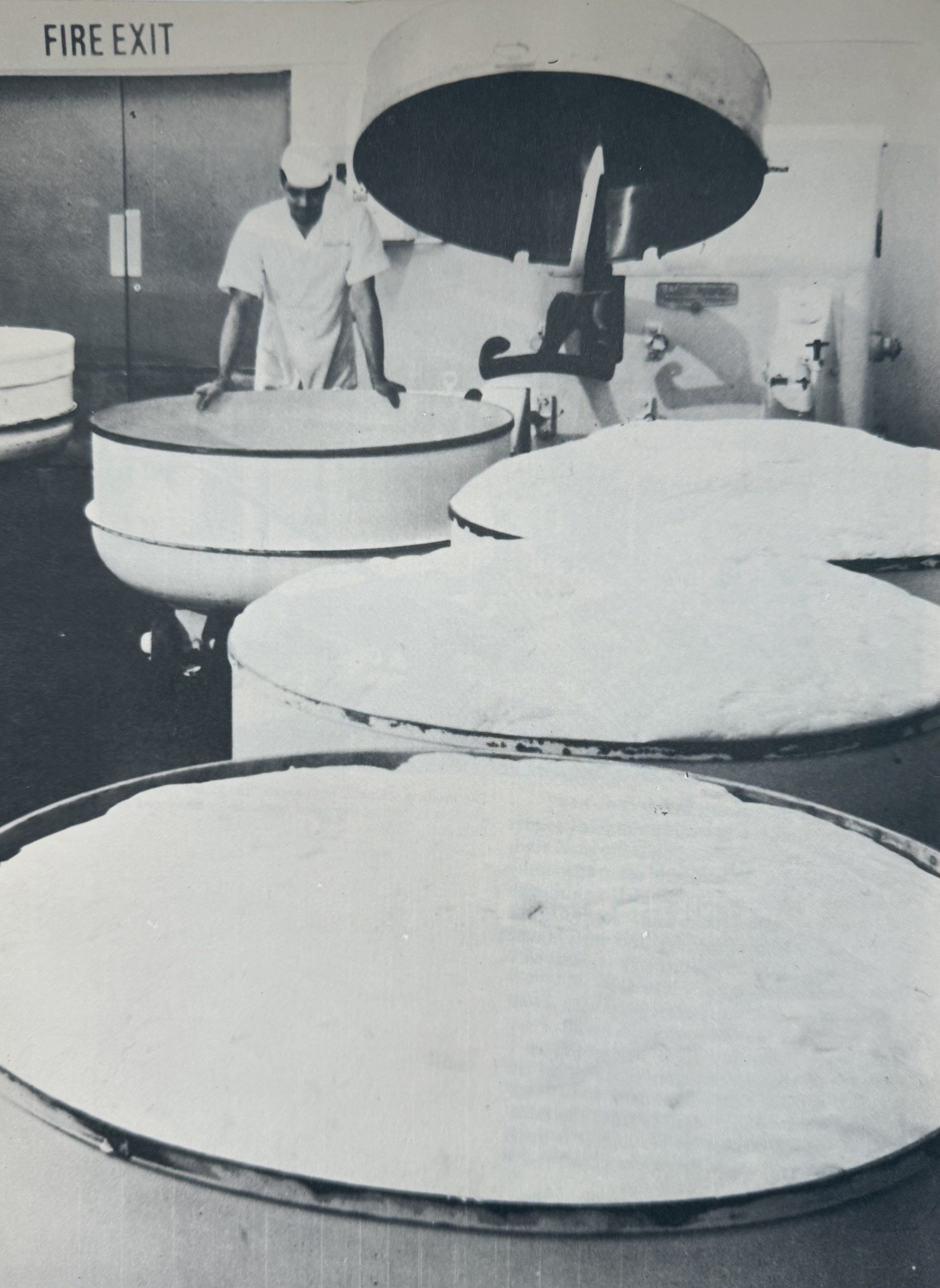
One of the things I love the most about bread is the way that it forces the baker to break from all disembodied authoritative voices. No matter how firmly we, the recipe writers, implore a reader to do something a certain way or at a certain time, bread is firmly a product of place. It requires the baker to respond to unique, changeable, lived circumstances that no technology or optimization can override.8 You must pay attention to your own life, or, at the very least, the bread will suffer. It’s a canary singing, and we should let it.
The boom in barely-fermented commercially-yeasted breads eventually inspired a renaissance of the more ‘natural’ - a slow and wild fermentation whose effects on the dough can only be gestured towards, not replicated, without it.9 This is in part because culture always flips over on itself, but also because sometimes we can only see the benefits of one form of technology after it’s subsumed by another. There’s nostalgia to blame, but also declines in product quality and health, and a kind of soulful discontent.
Call me Pollyanna but I think our inevitable reliance on LLMs will reform when we get to that stage, which we will. Eventually we’ll become bored and disgusted by the slackening, a premium will be placed on real human writing, and more and more people will flock to it, either out of the appeal of the rare, the promise of financial gain, or simply because it’s better. Right?
Ok, I don’t know. But for now I’m done feeling dystopian about it all. I’m optimistic in that I still believe in change and in the human impulse for good - “good” as in morality, but also quality - which ultimately motors our technological and cultural advancements. Tech at its most utopian is about connection and community, and this is also where it shows itself as most hypocritical. The good news is that everyone is hypocritical, and the hall of mirrors that this meta-hypocrisy creates might someday make us dizzy enough to throw up, then become so disgusted with whatever we ate that we decide we never want to eat it again. That we have to change what we’re consuming before it consumes us.
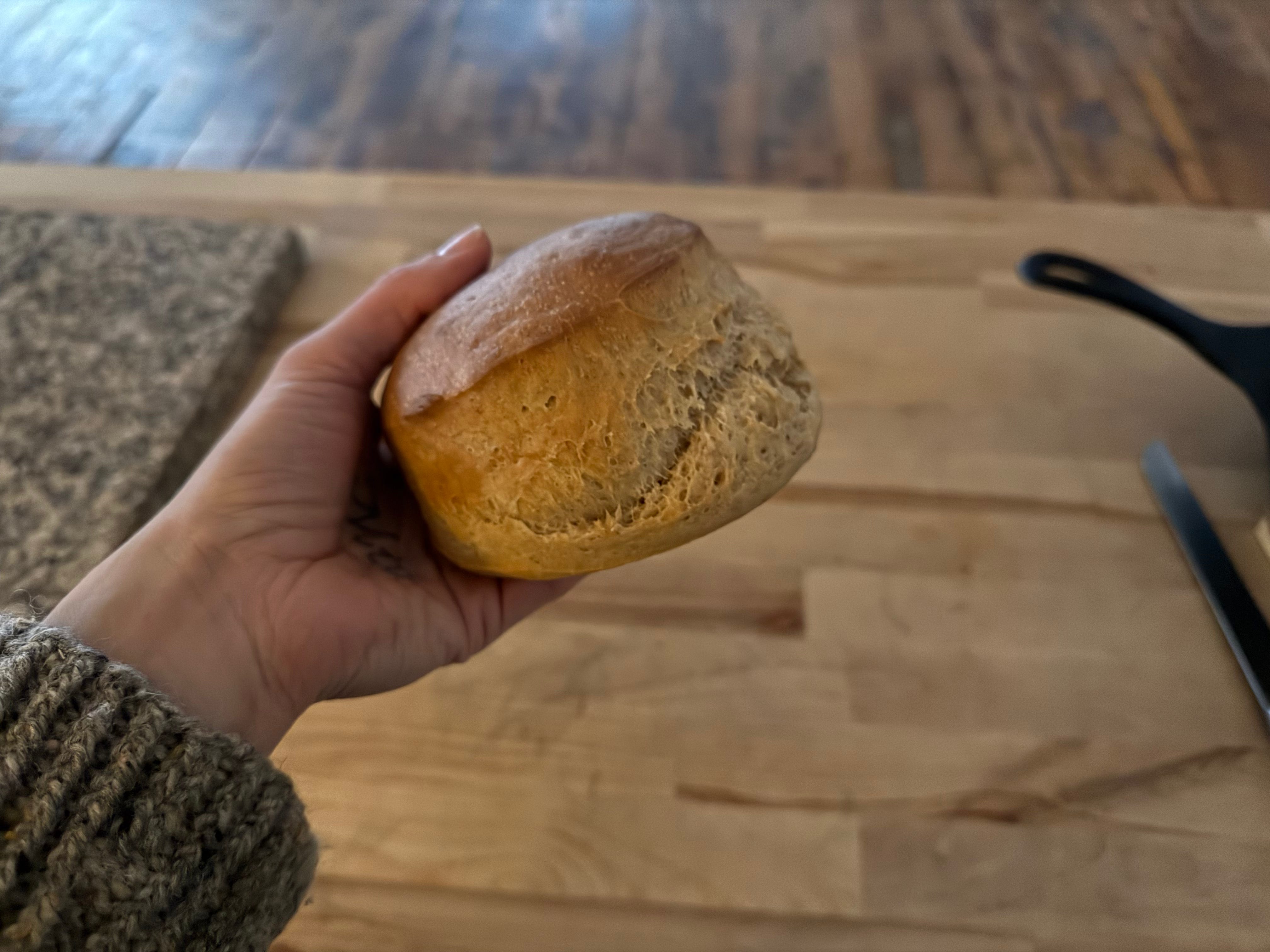
Images from https://pmc.ncbi.nlm.nih.gov/articles/PMC5976591/, Showbread, by W.T. Banfield, 1950, and my kitchen.
“WHY NOT ME?” is a note I recently stuck to my desk, to be read only in a Butler-infused voice of entitlement.
One viral essay just described a cum load as a “a clump of human sourdough starter,” and who can really argue?
I’m an identical twin, for one. I think I have a soft spot for organisms that are constitutionally entirely indistinct.
I’m sure some of you will want to shout at me about ‘all the great independent reporting being done here on substack’ and while you are right, so am I.
I don’t believe that we should necessarily livestream the sausage being made at all times, but public ignorance regarding the whereabouts of our food production has more negative consequences than I can list here, though we can start with corporate consolidation and environmental exploitation.
Just look to the hue of whatever is perceived as “healthy bread” at any given time and watch its correlation with social politics.
Though they’d been stalking their summit for some time, as Dayna Evans wrote about in this article in 2018.
Of course some technologies do make those individual circumstances less effecting.
I read a line in The Hobbit recently: “He was looking out of his pale lamp-like eyes for blind fish, which he grabbed with his long fingers as quick as thinking.” As quick as thinking! This speed is the brilliance and exhilaration of having a mind. Thoughts layer and impose on each other; writing is just the process of trying to grab one out of the heap and make it clear. It never comes out without some other rogue idea, however unfurnished, clinging to it. AIs are incapable of this.